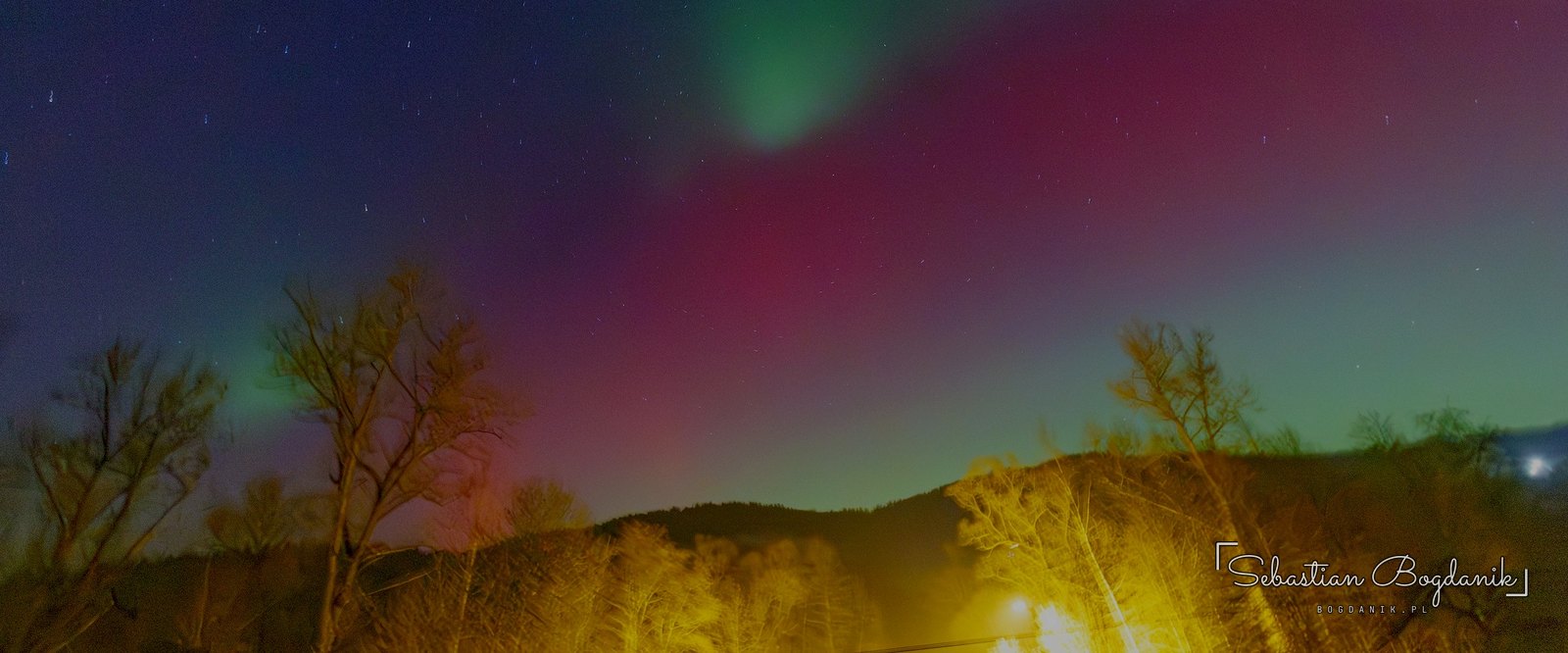
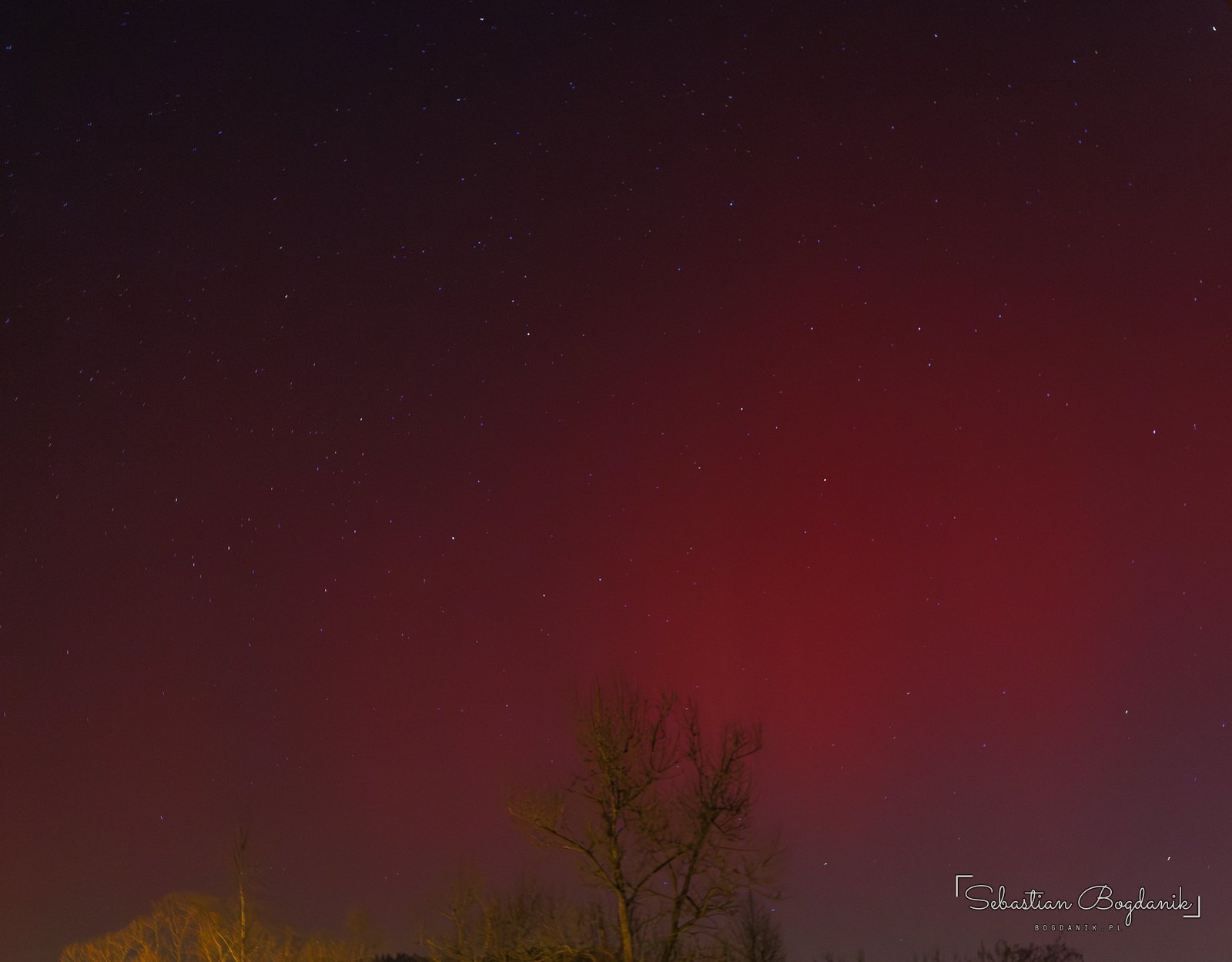
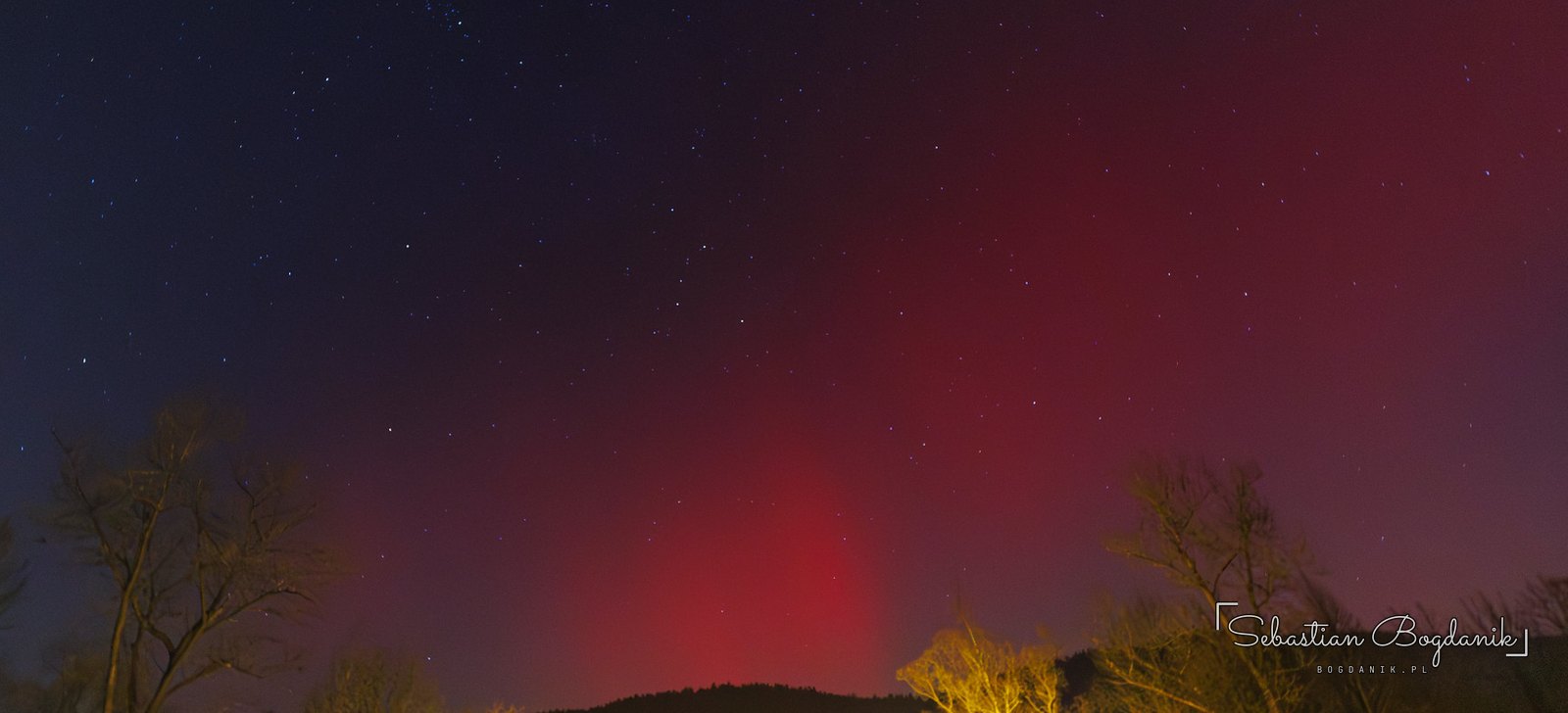
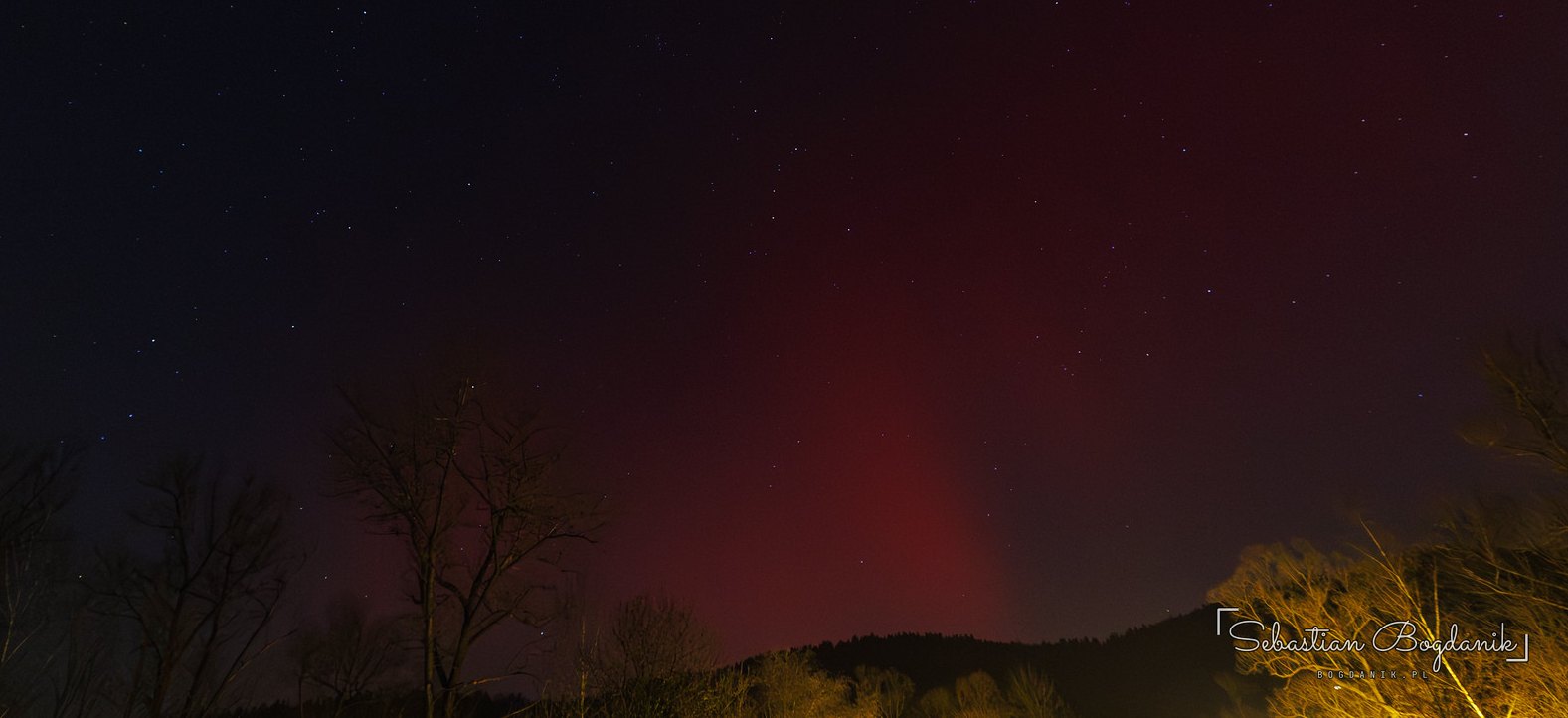
On the evening of 19 January 2026 the sky over the Beskid Mountains of southern Poland lit up in green and red. The aurora, a sight people associate with Norway and Iceland, shone for more than an hour over Sucha County, where it is exceptionally rare. It was bright enough to see with the naked eye, and I took every one of these photos handheld, without a tripod, between 10:17 and 11:39 pm.
Why an aurora this far south
It started with a powerful X1.9 solar flare. The coronal mass ejection (CME) that came with it reached Earth in only about 25 hours, arriving on the evening of 19 January, and triggered a G4 “severe” geomagnetic storm, the second-highest level on the five-step scale. The same day an S4 solar radiation storm hit, the strongest since 2003.
The aurora was visible across almost all of Poland, from the Baltic coast to the Tatra Mountains, even in city centres. In the far south of the country, though, far from the auroral oval, it usually shows up only as a faint glow low on the northern horizon, often visible only in a photo. This time was different.
Red first, then a green ribbon
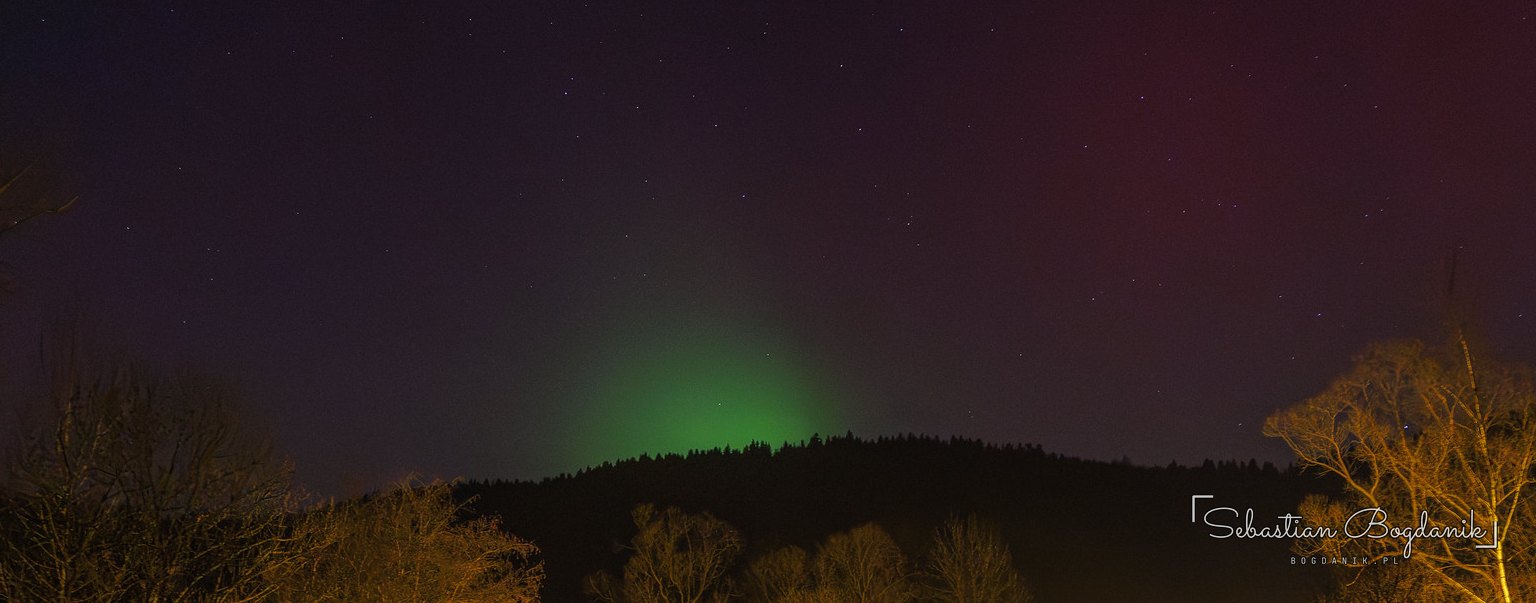
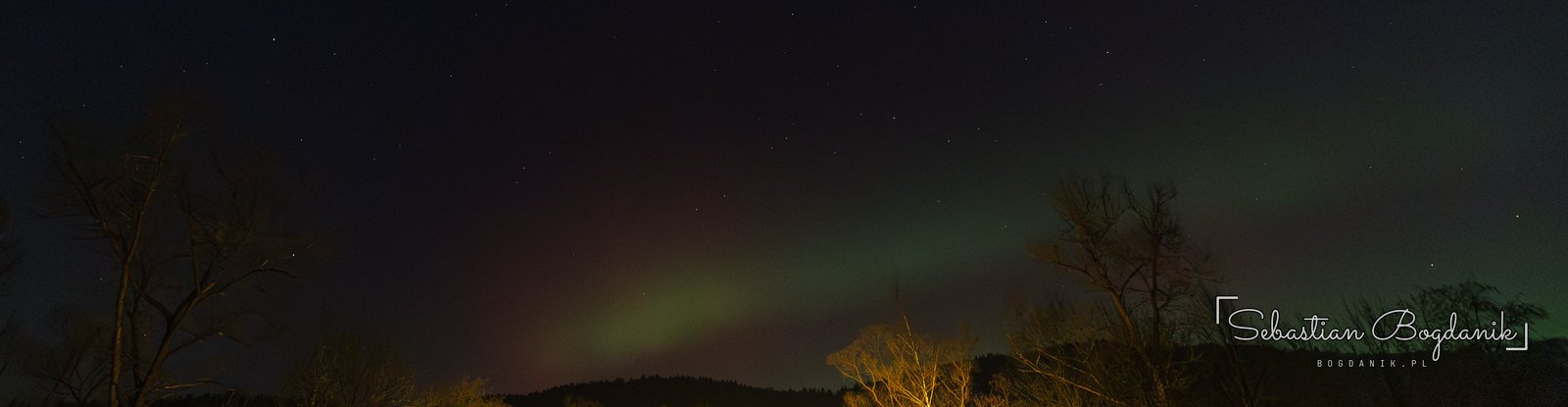
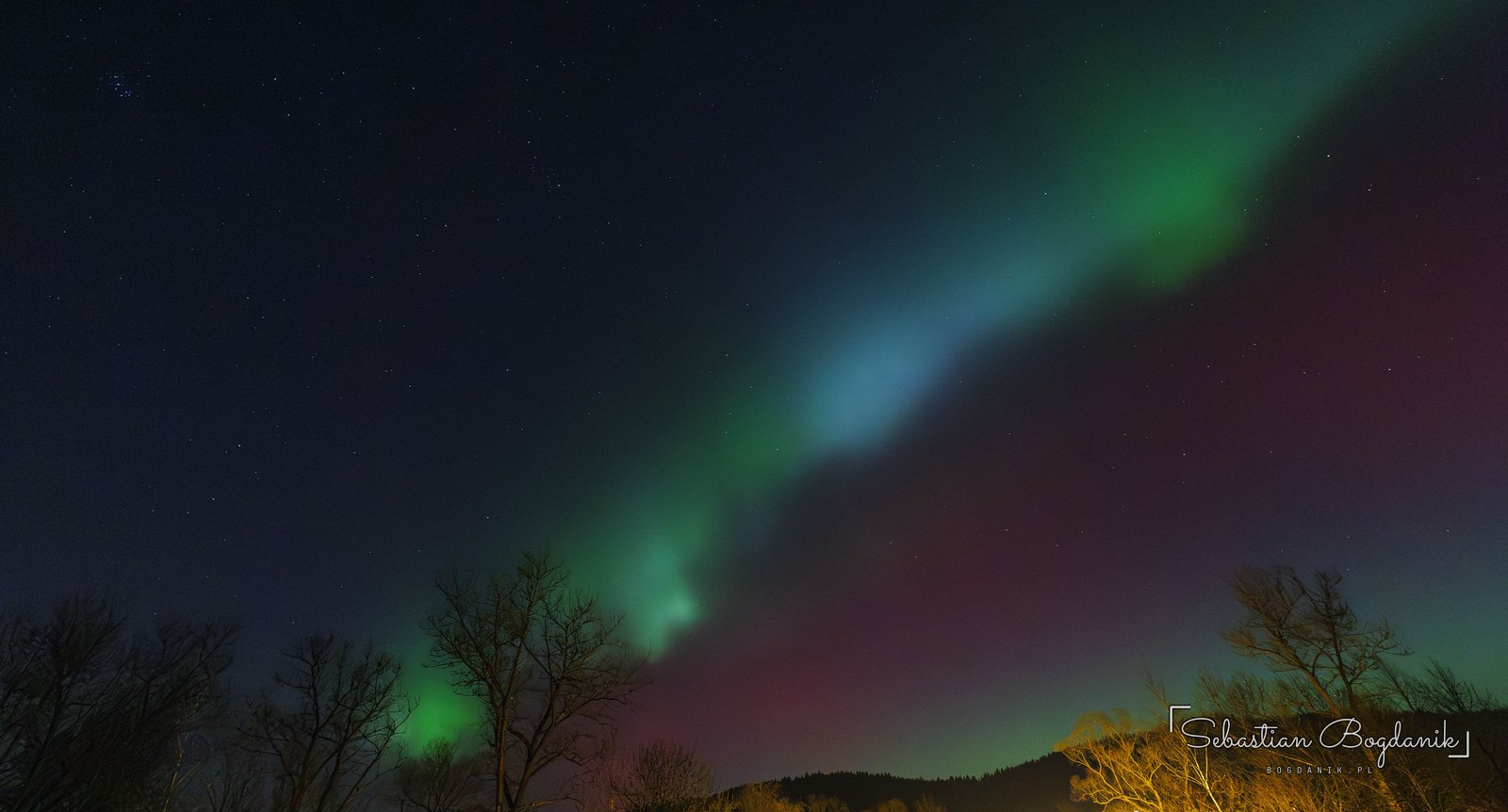
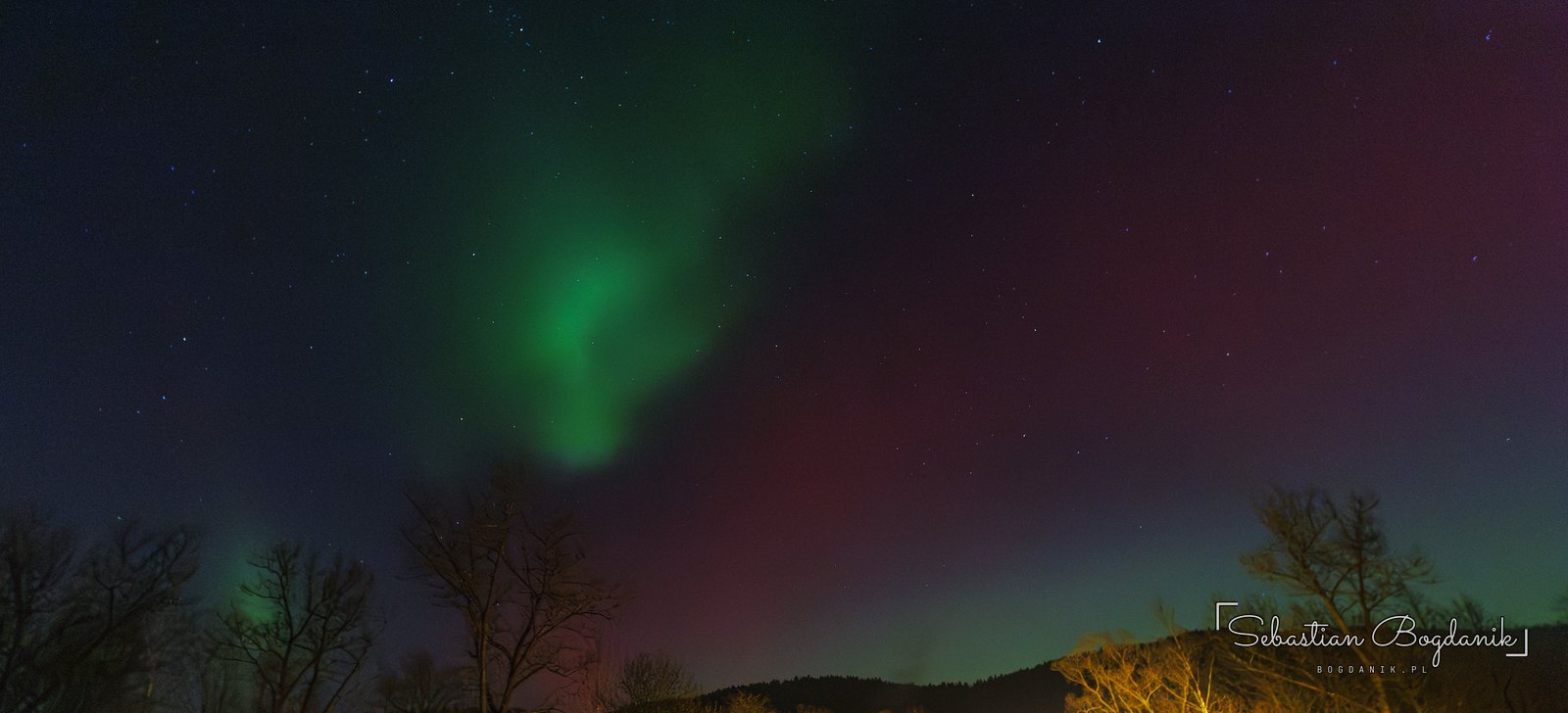
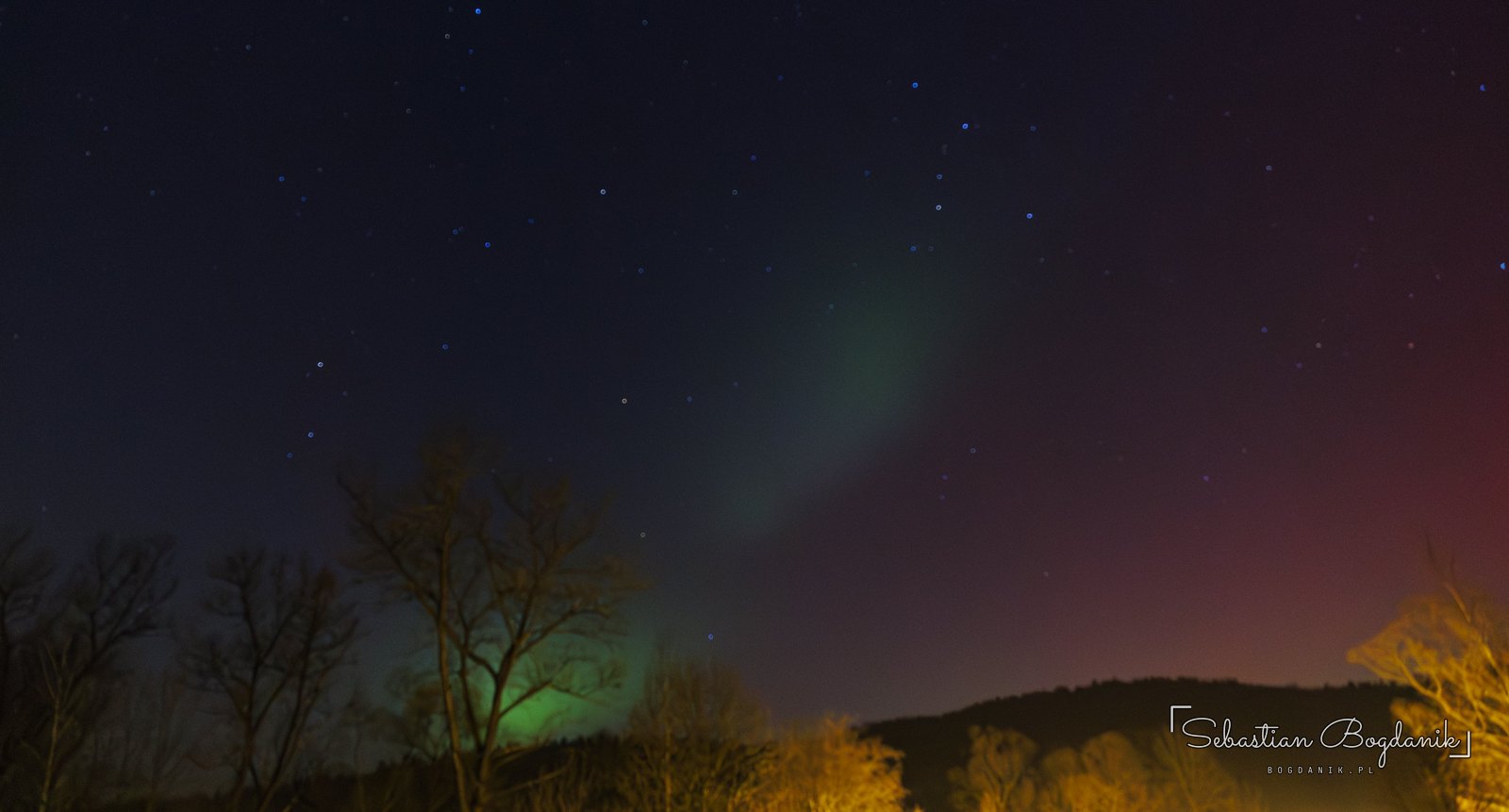
At first the aurora looked modest: a red glow above the forest and a green light just over the ridge. Around 10:30 pm a green arc formed low on the horizon. A few minutes later it began to grow and climb the sky.
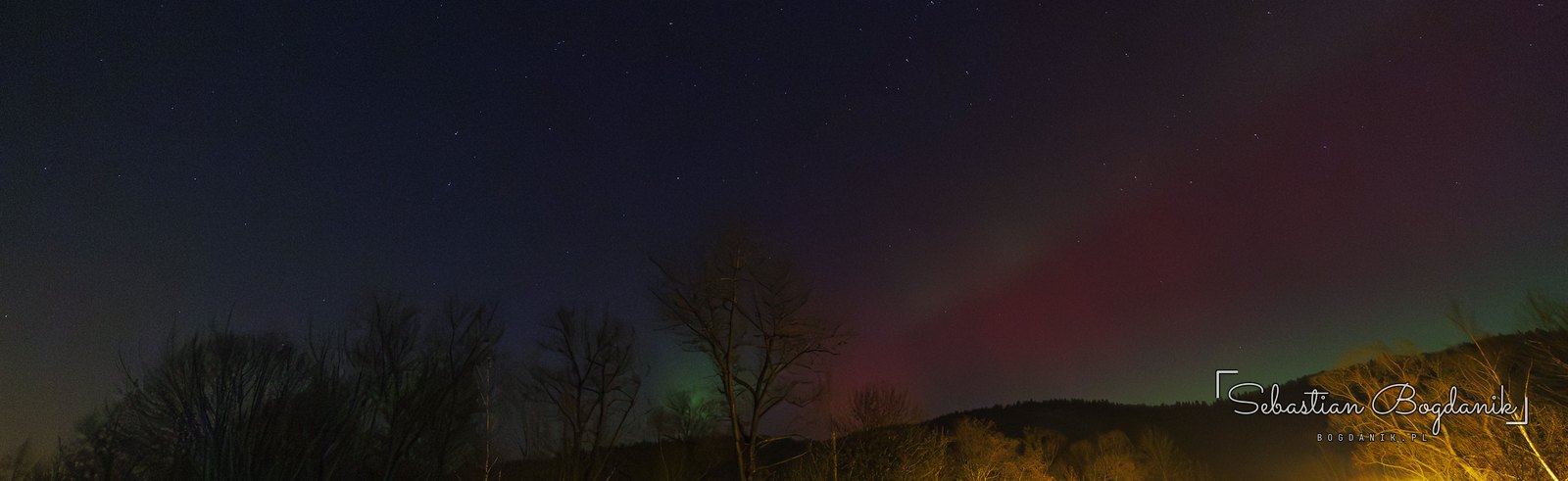
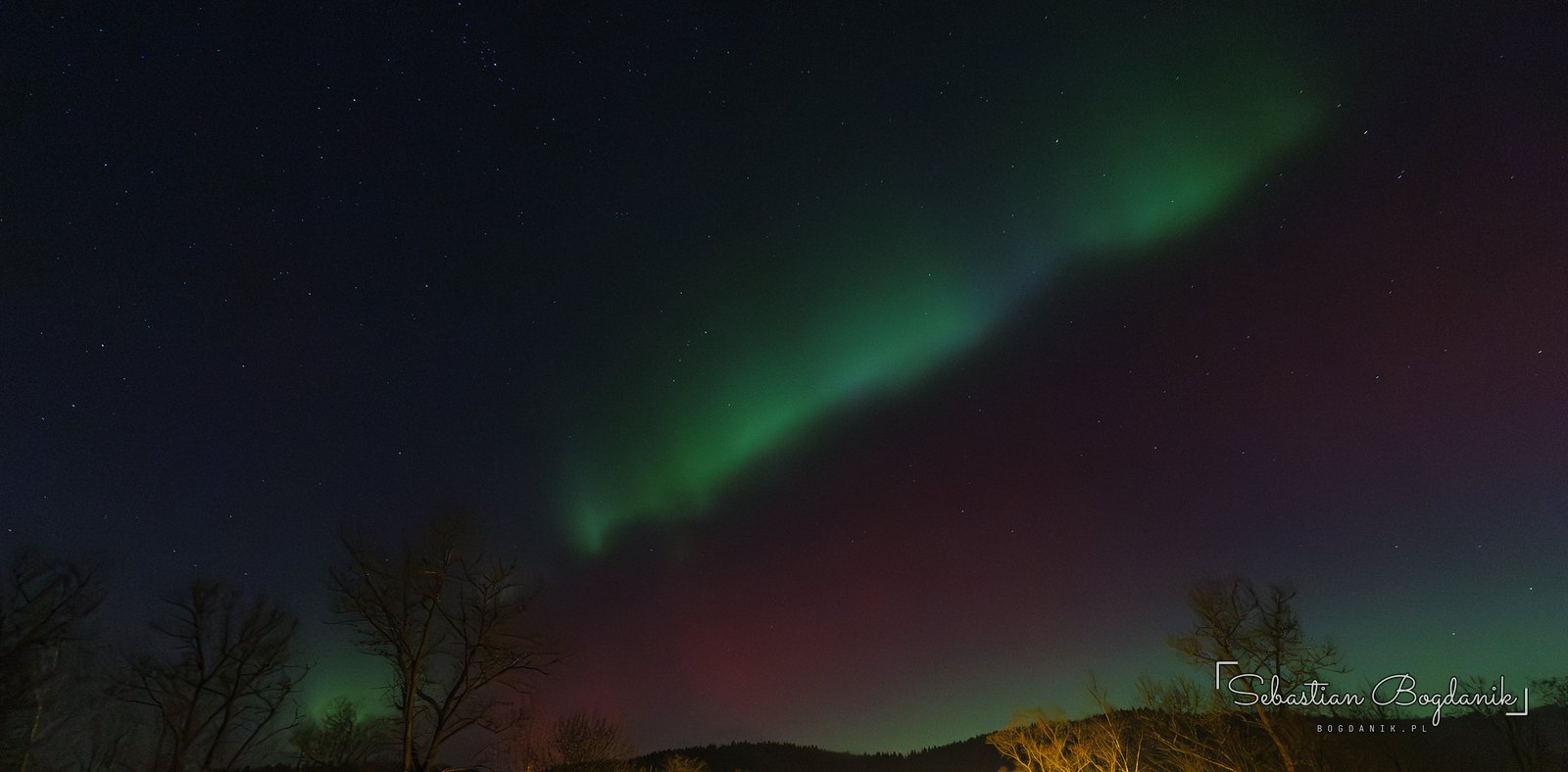
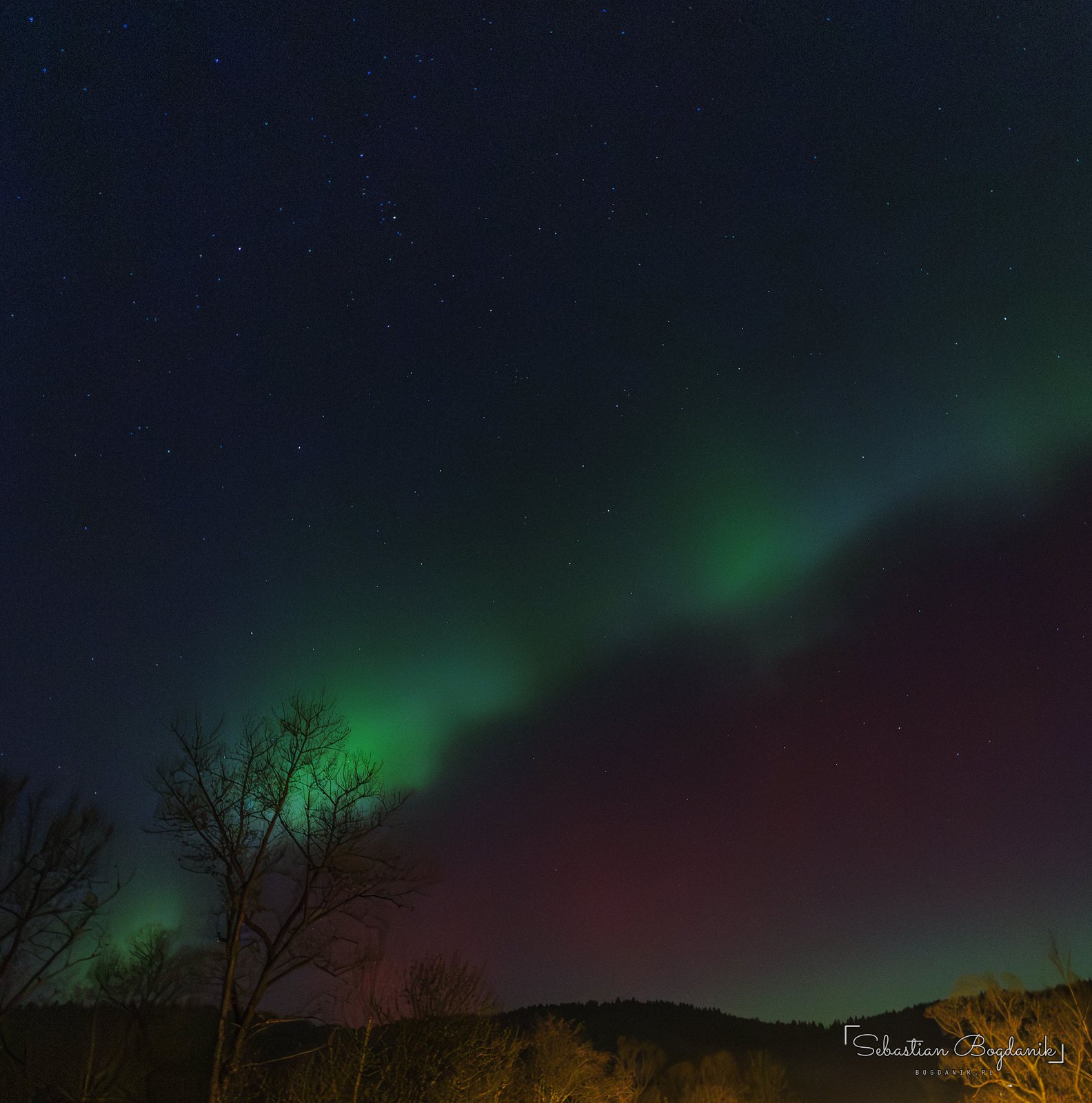
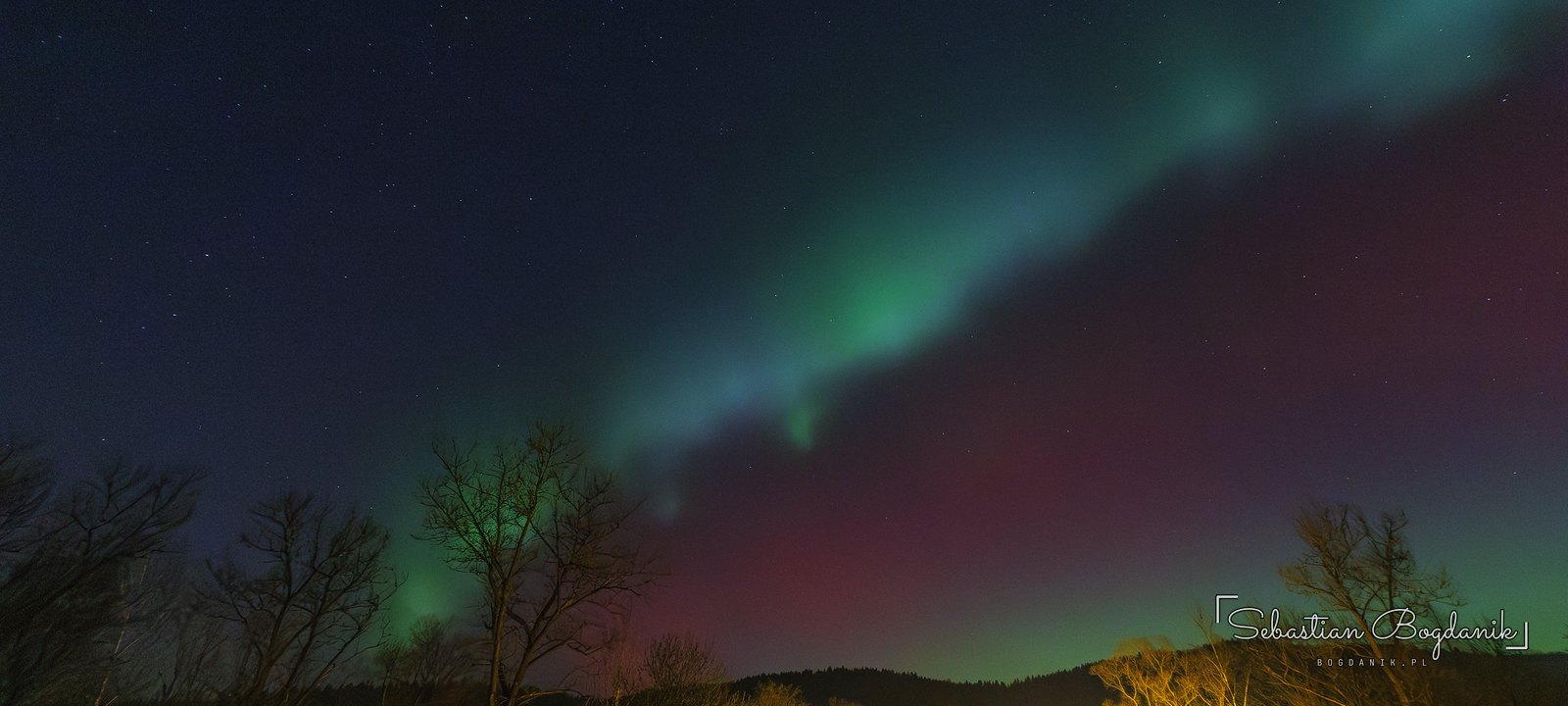
Between 10:35 and 10:40 pm the display peaked. A green ribbon cut diagonally across the sky to the zenith, with blue and turquoise bands inside it and a red curtain below and to the side. The shapes changed from minute to minute, as the sequence of photos shows.
Arcs, ribbons, rays: what was actually glowing
An aurora looks like electric discharges across the sky, but it is not lightning. Charged particles from the Sun, mostly electrons, pour into the upper atmosphere along the lines of Earth’s magnetic field. They collide with oxygen atoms and nitrogen molecules, which give the energy back as light. It is the same principle as a fluorescent tube or a neon sign, only hundreds of kilometres up.
That night the Beskids saw almost every classic aurora form:
- Arc: a calm, even band of light low on the horizon. That is how it began, around 10:30 pm.
- Ribbon: an arc that ripples and folds like a ribbon. This is what cut diagonally across the sky between 10:35 and 10:40 pm.
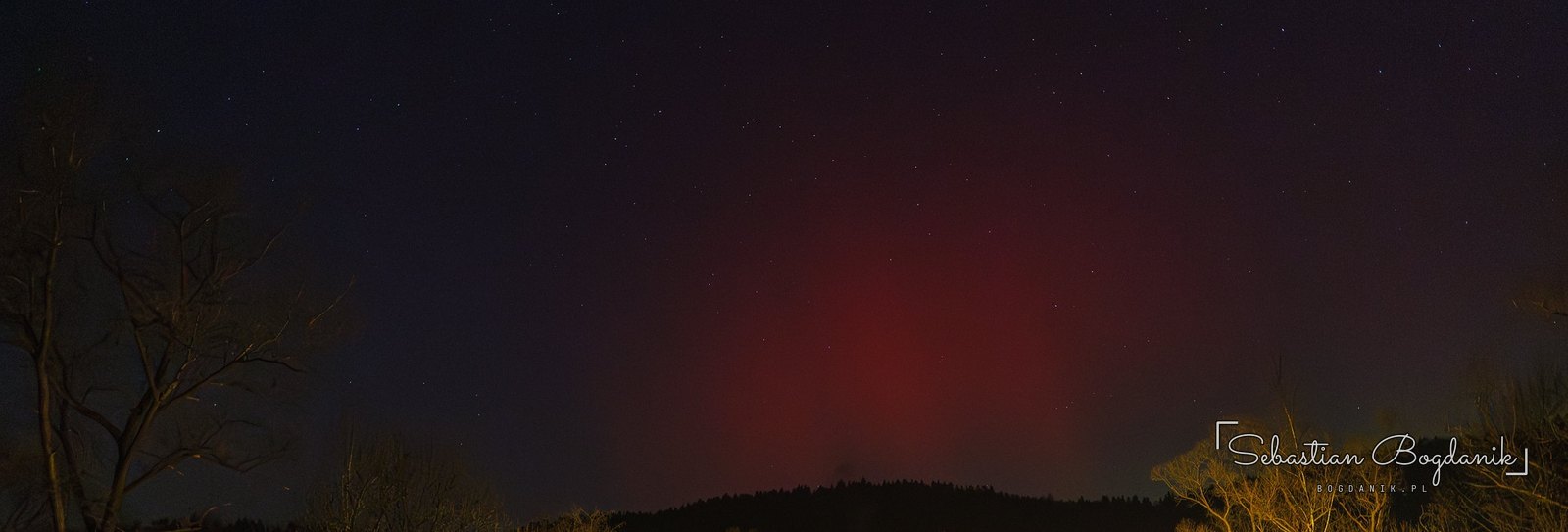
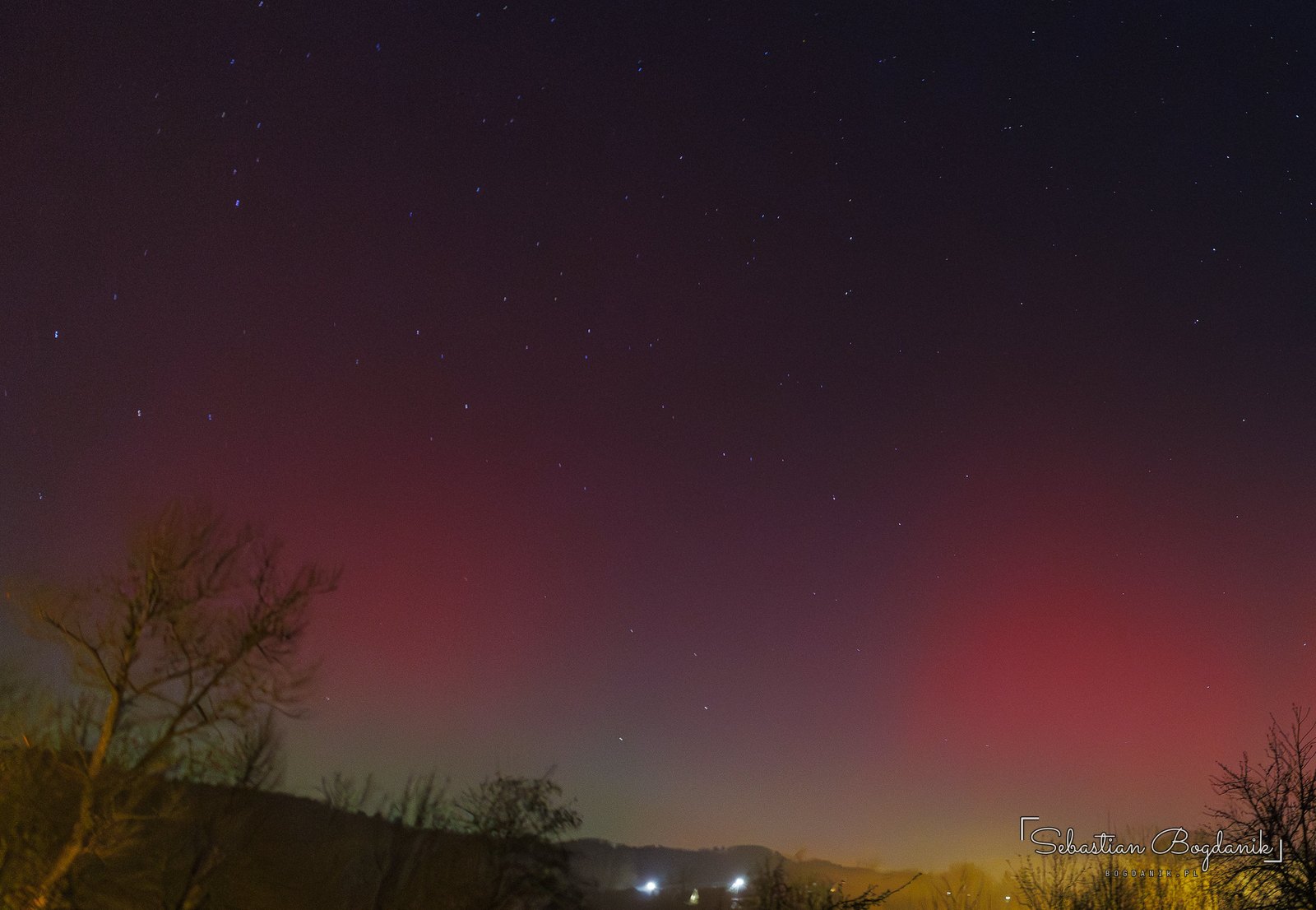
- Rays and pillars: vertical streaks aligned with the magnetic field lines. The red pillars rising from behind the ridge after 11 pm were rays.
- Veil and glow: diffuse light without clear edges. A red glow filled the sky towards the end of the night.
Why two colours
An aurora’s colour depends on altitude. Green comes from oxygen at about 100–200 km, red from the same oxygen higher up, at about 200–400 km. That is why from southern Poland, far away, we more often see the red upper parts of an aurora. A green ribbon over the Beskids meant the aurora had reached unusually far south.
A red finale
After 10:50 pm the green faded and red filled more and more of the sky. By about 11 pm a red glow covered nearly the whole sky, with red pillars rising from behind the ridge. After 11:15 pm the aurora began to fade. The last frames, taken before 11:40 pm, show only stars and the dark outline of the hills.
Did you know?
- About 1,700 km per second. That is the average speed the solar plasma cloud needed to cover nearly 150 million kilometres in about 25 hours. The trip usually takes two to four days.
- Red is patient. An oxygen atom that glows red “waits” on average almost two minutes before releasing its light; one that glows green, less than a second. Lower in the atmosphere the atom would collide with others in the meantime and lose its energy without glowing. That is why red appears only high up, where the air is extremely thin.
- The eye is bad at red. In the dark we see mostly with the rods in our retina, which are barely sensitive to red light. A faint aurora often looks greyish to the eye but red in a photo. This one was bright enough to see without a camera and to shoot handheld.
- Higher than people fly. Auroras glow 100–400 km above the ground. Airliners cruise at about 10 km; the International Space Station orbits at about 400 km, at the very top of the aurora.
- Poland has seen auroras before. The best-known recent one was on the night of 10–11 May 2024. The record for reach is the Carrington Event of 1859, when auroras were seen close to the tropics and telegraph lines threw sparks.
Will it happen again?
The Sun is still active after the recent maximum of its 11-year cycle, so strong geomagnetic storms may still come. An aurora over the Beskids cannot be planned, though. When forecasts call for a G3 storm or stronger, it is worth heading out of town after dark, away from the lights, and looking north. A camera usually shows more than the eye, especially the red.